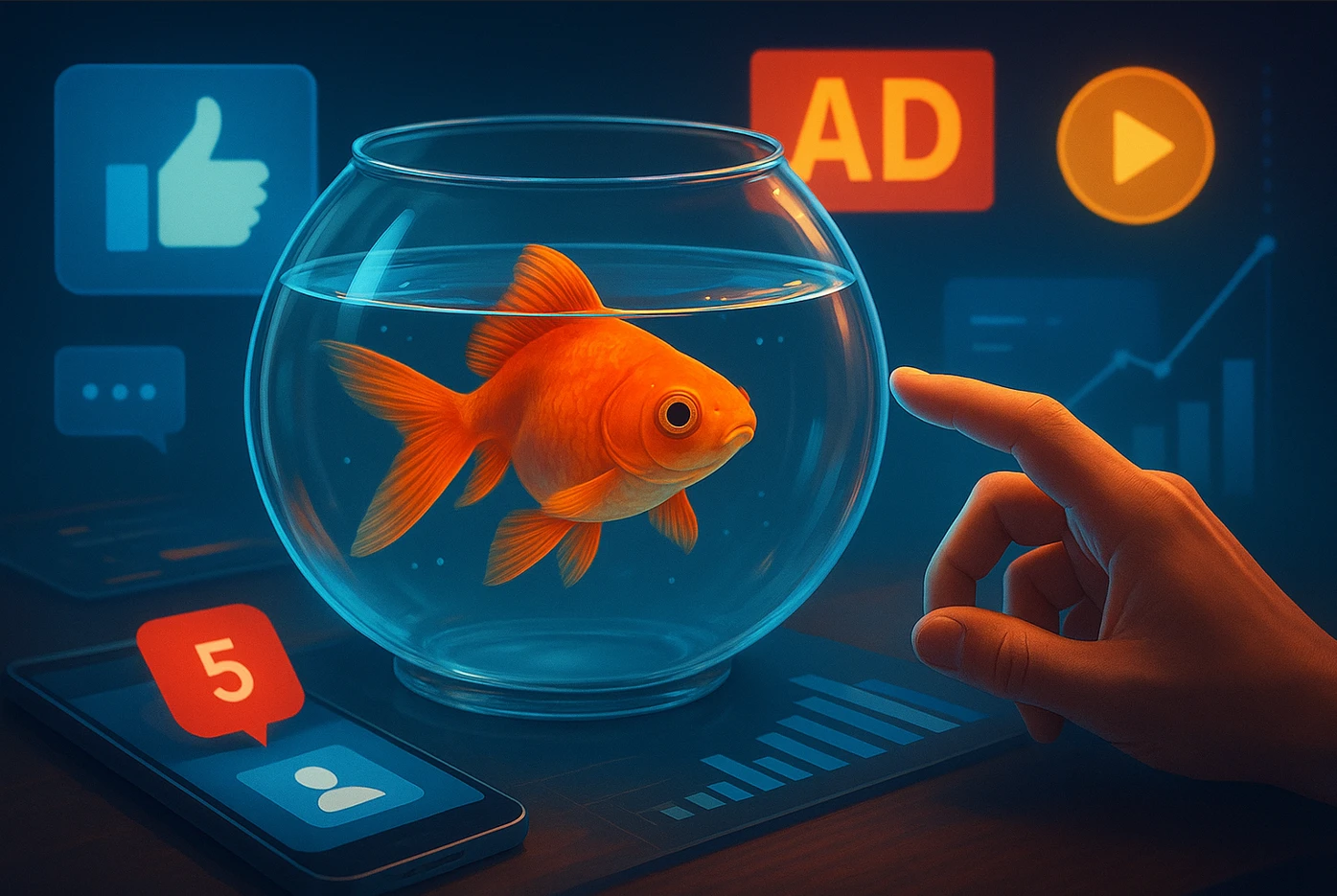
Have you ever felt that people just don't listen anymore? Like they are always distracted, scrolling or looking for the next shiny thing? Well, you're not imagining it. Research has shown that the average attention span of an adult has shrunk to 8 seconds, 1 second less than a goldfish. And for you, that means having just a blink of an eye to hook a potential customer before they swim away for good. So don't let your attention span get the better of you right now, stay with me here!
Lead with a Curiosity Hook
Your first sentence matters the most. It doesn't matter if it's an email, an ad or sales pitch, the opening has to snap people out of autopilot mode. You need to start with something that grabs attention and proceeds to hold it, challenge an assumption or bring forth a thought provoking question. People naturally spend more attention on content that feels relevant to their own lives, so the more specific and direct you can be, the better.
A hook should create an information gap, making the reader crave the answer. If your first few words don't make them pause, you've already lost them.
Cut Through the Noise
People consume information at lightning speed. If they have to scroll too much before understanding what you're offering, you can lose their interest and attention. This applies to sales decks, emails and websites.
Today's customers don't have the patience or time for lengthy explanations or long pitches. They want quick, digestible information that tells them exactly why they should care.
To streamline your message, cut out unnecessary fluff. Use formatting to your advantage, bold key phrases, break up large blocks of text and structure content in a way that makes it easy to digest. This makes sure that even if someone only glances at your message, they still get the essential information.
Show, Don't Tell
Our brains process images 60,000 times faster than texts. So, if you want to capture attention really quickly, show rather than tell. The internet is flowing with text heavy content and most people don't have the patience to go through it.
Instead of long product descriptions, use quality images or short videos to demonstrate. Infographics can be particularly effective in breaking down complex information into easily digestible pieces. Look at Apple's marketing, they rely on sleek visuals and minimal text, yet their message is crystal clear.
This doesn't mean to use images over text completely, find a good balance in a way that benefits you and what you want to get across.
Stand Out in the Crowd
People tune out when things feel predictable. That's why you should introduce surprises into your messaging. One way to break the pattern is by using unexpected subject lines or conversation starters. A little intrigue goes a long way.
Humor and relatability are two things we know that work well in a lot of contexts, and it applies here as well. A genuine funny joke or a conversational tone can make your pitch feel less like a sales tactic and more like a chat between friends.
The important note is to be unpredictable in a way that feels natural rather than gimmicky.
Speed Up the Sale
With short attention spans, the longer you take to close, the more likely your potential customer will move on. The less effort a customer has to put in, the higher the chance they will complete the purchase.
Consider offering one click demos instead of requiring long sign up processes. Implement instant chat responses rather than forcing customers to wait for an email. Amazon's one click purchase feature is a great example of streamlining the buying process.
Urgency is also very effective. Limited time discounts, low stock notifications or fast track onboarding options can push hesitant buyers toward making a decision.
Follow Up (Without Being Annoying)
Even if someone is interested, life will find a way to distract them. That's why strategic follow ups are really important.
Each follow up should have a clear purpose. Keep the focus on how you can solve their problems, not just on closing the sale.
Timing is also key. Space out your follow ups and use different methods, switch between emails, phone calls and even social media messages. And when you're at the point of sending a follow up, be strategic with it. Write messages that show you're considerate of their time and focused on what matters.
If a prospect still hasn't responded after a few attempts, don't be afraid to ask if they are just not interested. Sometimes a straightforward, "hey, if this isn't the right time for you, no worries!" will allow you to move on without being pushy and leaving a bad impression, while also giving them a chance to reopen the conversation on their own terms.
Just remember to offer value and be respectful of their time. That's the sweet spot between persistence and annoyance.
So, hook your audience quickly, deliver value and stand out in a way that makes people remember you. Make every second count, be bold and simplify your approach, because if you can't capture their attention in 8 seconds, someone else will.